서예·캘리그라피 Calligraphy
-
[Review]
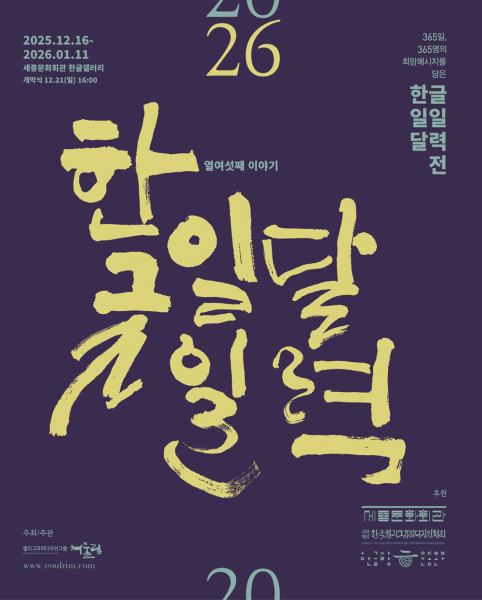
제16회 2026 한글일일달력전 / 전시 12.16-1.11
365개의 문장으로 전하는 희망, 제16회 2026 한글일일달력전한글 캘리그라피 디자인으로 기록하는 하루와 희망의 언어캘리그라피디자인그룹 어울림이 주최·주관하는 이번 전시는 365명의 참여자가 하루를 상징하는 희망의 문장을 한글 캘리그라피 디자인으로 기록한 작품 365점으로 구성된다.전시는 언어와 시각예술이 만나는 지점을 조명하며, 참여자들이 각자의 감성을 담아 완성한 문장들이 하루 단위의 달력 형식으로 설치되어 하나의 시간의 흐름을 이룬다. 관람객은 작품을 따라 이동하며 일상의 시간과 한글 캘리그라피 디자인의 조형적, 정서적 울림을 경험하게 된다. 이는 한글이 \'읽는 언어\'를 넘어 \'바라보고 감각하는 디자인 언어\'로 확장되는 가능성을 보여준다.어울림 모은영 회장은 “한글일일달력전은 한글을 매개로 사람들이 생각과 시간을 존중하며 연결되어 온 기록”이라며, “한 장의 글씨가 누군가의 하루를 지탱하고 내일을 기대하게 만드는 힘이 되기를 바란다”고 밝혔다. 2010년 결성된 어울림은 16년간 한글을 주제로 한 창작과 참여 문화를 꾸준히 이어왔다.이번 전시에는 국회의원, 박물관장, 단체장, 연예인, 캘리그라피 작가 등 국내외 저명인사와 작가들이 참여하여 그 의미를 더한다. 전시에는 세종문화회관, 한글사랑운동본부, (사)한국캘리그라피디자인협회 등의 후원으로 진행된다.전시 정보-전시 기간: 2025.12.16.(화)–2026.1.11.(일)-장소: 세종문화회관 세종이야기 한글갤러리-관람 시간: 10:00–18:30 (입장 마감 18:00, 매주 월요일 휴관)-개막식: 2025.12.21.(일) 오후 4시-연계 행사: 2025.12.27.(토) 오후 1시–4시※ 문의 : 어울림 사무국 010-8393-3420
-
[Review]
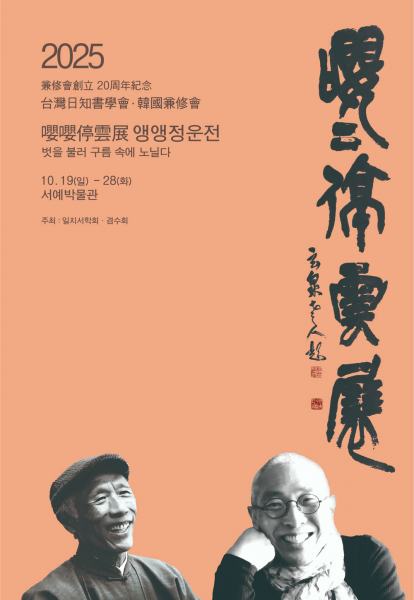
앵앵정운전(嚶嚶停雲展) / 전시 10.19-28
선 하나가 건넌 바다한·대만 서예 교류전〈앵앵정운전(嚶嚶停雲展)〉서예는 가장 오래된 예술 중 하나이지만, 동시에 여전히 현재진행형의 언어다. 서울 서초구 예술의전당 서예박물관에서 지난 10월 19일부터 28일까지 열린 한·대만 서예 교류전 〈앵앵정운전(嚶嚶停雲展)〉은 이 사실을 또렷하게 증명한 자리였다. 한국의 겸수회와 대만의 일지서학회가 공동 기획한 이번 전시는, 양국 서예가 63명이 참여해 약 220여 점의 작품을 선보이며 ‘우정’이라는 키워드로 두 문화권을 연결했다.전시장에 들어서자마자 관람객을 맞이하는 것은 하석 박원규 선생의 대형 작품이다. 높이 약 8m, 길이 약 16m에 달하는 이 작품은 글씨가 더 이상 종이 위의 대상에 머무르지 않고, 공간 전체를 점유하는 조형이 될 수 있음을 선언하듯 자리한다. 거대한 획의 흐름은 관람자의 시선을 벽에서 바닥으로, 다시 공중으로 이끌며 ‘읽는 서예’가 아닌 ‘걷는 서예’를 경험하게 한다.이번 전시의 또 하나의 특징은 한국과 대만 작가들의 작품이 나란히 배치된 구성이다. 같은 한자 문화권, 같은 붓과 먹을 사용하지만 작품이 만들어내는 분위기는 분명한 차이를 드러낸다. 한국 작가들의 작품은 비교적 절제된 호흡과 고요한 균형을 지녔고, 대만 작가들의 작업은 보다 과감한 필획과 적극적인 공간 점유를 보여준다. 마치 같은 문법을 공유하면서도 문체가 다른 두 시인의 시를 읽는 듯한 인상이다. 이 차이는 단순한 기법의 문제가 아니라, 각기 다른 교육 배경과 미의식, 그리고 시대 경험이 축적된 결과로 읽힌다.전시 제목인 ‘嚶嚶停雲’은 고전 문헌에서 비롯된 표현으로, ‘벗을 부르는 새의 울음소리’와 ‘구름을 머물게 하다’라는 시적 이미지를 품고 있다. 이 제목은 전시 전체를 관통하는 은유이기도 하다. 작가와 작가, 문화와 문화, 세대와 세대가 하나의 획을 매개로 서로를 부르고, 응답하며, 잠시 머무는 장면들이 전시장 곳곳에서 펼쳐진다.특히 이번 전시는 한국의 박원규 선생과 대만의 두충고 선생 문하 작가들이 함께 참여한 자리로, ‘양문전(兩門展)’이라는 별칭으로도 불렸다. 스승과 제자, 선배와 후배가 한 공간에서 작품으로 대화하는 구조는 서예가 개인의 표현을 넘어 ‘관계의 예술’임을 다시금 환기시킨다. 한 관람객은 이렇게 소감을 전했다.“서예라고 하면 늘 조용하고 정적인 이미지가 떠올랐는데, 이곳에서는 전혀 달랐어요. 대형 작품 앞에 서 있으니 현대미술관에 온 느낌이 들었고, 획이 벽을 타고 흐르며 여백이 공간을 읽게 하더군요. 글씨가 아니라 서예의 ‘움직임’을 본 것 같았습니다.”이 말처럼, 이번 전시는 규모와 배치를 통해 서예에 대한 기존의 인식을 흔들어 놓았다. 서예가 사각의 종이 안에 갇힌 장르가 아니라, 공간을 열고 관람자의 몸과 직접 대화할 수 있는 예술임을 체감하게 한다.〈앵앵정운전〉은 단순한 국가 간 교류전을 넘어선다. 전통과 현대, 거장과 제자, 한국과 대만이라는 여러 층위가 한 자리에 포개지며, 예술이 관계를 맺는 방식에 대해 질문을 던진다. ‘벗’이라는 개념을 통해 서예가 어떻게 문화 간 거리를 좁히고, 감정의 축을 형성할 수 있는지를 보여준 것이다.전시장을 나서는 발걸음은 묘하게 가볍다. 마침표보다는 쉼표에 가까운 여운이 남는다.서예는 과거를 기리는 행위에 머무르지 않는다.획은 여전히 움직이고, 종이는 여전히 바람을 담는다.그리고 그 바람은, 국경을 넘어 다음 만남을 예고하고 있었다.-글씨21A Single Line Crossing the SeaKorea–Taiwan Calligraphy Exchange ExhibitionAeng-Aeng Jeongun Exhibition (嚶嚶停雲展)Calligraphy is one of the oldest art forms, yet at the same time, it remains a living, evolving language. The Korea–Taiwan Calligraphy Exchange Exhibition Aeng-Aeng Jeongun (嚶嚶停雲展), held from October 19 to 28 at the Calligraphy Art Museum of the Seoul Arts Center in Seocho-gu, Seoul, clearly demonstrated this enduring vitality. Co-organized by Korea’s Gyeomsuhoe and Taiwan’s Riji Calligraphy Society, the exhibition brought together 63 artists from both countries, presenting approximately 220 works that connected two cultural spheres through the shared keyword of “friendship.”Upon entering the exhibition hall, visitors were immediately confronted by a monumental work by Master Park Won-gyu (Haseok). Measuring approximately 8 meters in height and 16 meters in length, the piece boldly declares that calligraphy can transcend the confines of paper and become a form that occupies and commands space itself. The sweeping flow of its strokes guides the viewer’s gaze from wall to floor and upward again, offering an experience not of “reading” calligraphy, but of “walking through” it.Another defining feature of the exhibition lay in the juxtaposition of Korean and Taiwanese works displayed side by side. Although both share the same sinographic cultural heritage and employ the same tools—brush and ink—the atmospheres they create are distinctly different. Korean works tend to embody restrained breathing and quiet balance, while Taiwanese pieces often assert bolder strokes and a more active engagement with space. The effect is akin to reading poems by two poets who share the same grammar yet write in markedly different styles. These differences are not merely technical; they reflect divergent educational backgrounds, aesthetic sensibilities, and accumulated historical experiences.The exhibition title, Aeng-Aeng Jeongun (嚶嚶停雲), originates from classical literature, evoking the imagery of “birds calling out to friends” and “clouds brought to a pause.” This poetic expression functions as a metaphor that permeates the entire exhibition. Throughout the gallery, scenes unfold in which artists converse with artists, cultures with cultures, and generations with generations—calling out and responding to one another through the medium of a single stroke.Notably, the exhibition also featured works by disciples of Master Park Won-gyu of Korea and Master Du Chung-kao of Taiwan, earning it the additional designation of a “Two Lineages Exhibition (兩門展).” The structure—where teachers and students, seniors and juniors share a single space—underscores calligraphy not merely as an individual act of expression, but as an art of relationships.One visitor shared the following impression:“I always thought of calligraphy as something quiet and static. But here, everything felt different. Standing before the large-scale works, I felt as though I were in a contemporary art museum. The strokes flowed across the walls, and the empty spaces seemed to read the room itself. I wasn’t seeing letters—I was seeing the movement of calligraphy.”As this reflection suggests, the exhibition’s scale and spatial composition effectively challenged conventional perceptions of calligraphy. It allowed viewers to physically experience that calligraphy is not confined to rectangular sheets of paper, but can open space and engage in direct dialogue with the viewer’s body.Aeng-Aeng Jeongun transcends the framework of a simple international exchange exhibition. By layering tradition and modernity, masters and disciples, Korea and Taiwan within a single space, it poses a deeper question about how art forms relationships. Through the concept of “friendship,” the exhibition reveals how calligraphy can narrow cultural distances and form an emotional axis that crosses borders.Leaving the exhibition, one’s steps feel unexpectedly light. What lingers is not a period, but a comma—a pause filled with anticipation.Calligraphy is not an act of merely honoring the past.The strokes continue to move,the paper continues to hold the wind.And that wind, crossing borders, quietly foretells the next encounter.- Geulc21
-

[News]
2025 한국서예학회 하반기 학술대회 / 12.12
한국서예학회·경기대학교 공동 주최 학술대회 성료, \"韓・中 서예문화 교류의 전개 양상\"을 주제로 천년을 이어온 한·중 서예 교류사 심층 분석, 신라의 대중(對中) 교섭부터 근대 전각 교류까지 양국 서예의 역사적 상호작용 논의한국서예학회(회장 장지훈)와 경기대학교 동아시아예술연구소가 공동으로 주최한 학술대회가 2025년 12월 12일(금) 오후 2시 경기대학교 수원캠퍼스 호연관 국제회의실에서 개최되었다. 이번 학술대회는 “韓・中 서예문화 교류의 전개 양상”을 주제로 한국과 중국의 서예가 역사적으로 어떠한 관계 속에서 상호 영향을 미치고 발전해 왔는가를 규명하는 자리로서 관련 학계와 연구자들의 많은 관심 속에 진행되었다.주제 발표에서는 한·중 서예 교류의 핵심 쟁점들을 시기별로 짚는 4편의 심도 있는 연구 결과가 공개되었다. 정현숙(원광대) 박사는 「신라 서예의 對中 교섭」을 통해 한국 서예의 기틀이 마련되던 시기, 신라 서예가 당대 중국과 활발하게 교류하며 수용과 변용을 거듭하는 과정을 상세히 분석했다. 徐昊然(경기대) 박사생은 「고려시대 書論의 宋代 書論 영향」을 발표하며 고려 서예 미학의 토대가 된 송나라 서론의 유입과 수용 양상을 조명했다. 박재복(경동대) 교수는 「근‧현대 韓中 서예문화 교류」에서 근대 이후 서예계의 인적·물적 교류 사례를 다루며 격변하는 시대 속에서 양국 서예가 서로에게 미친 영향을 다각도로 논의했다. 유지복(전주대) 교수는 「근대기 金台錫의 對中 篆刻 교류」를 발표하여 근대기 전각가 김태석(金台錫)의 구체적인 대중 교류 활동을 중심으로 서예 인접 분야에서의 교류사적 의의를 밝혔다.개회식에 참석한 경기대학교 손율 이사장은 “한국 서예 연구의 명맥을 이어가고 있는 서예학회에 참석하게 되어 매우 영광”이라면서 “서예계 인재를 양성하는 국내 유일의 경기대 서예학과를 중심으로 한국의 서예가 그 전통과 위상을 굳건히 지켜나갈 수 있기를 바란다.”고 격려하였다. 특히 고려대학교 김성인 명예교수가 학회에 발전기금 5천만원을 기탁함으로써 향후 한국 5년간 서예학회와 경기대학교 서예학과가 긴밀하게 협조하여 미래의 서예인재를 양성하는 사업을 추진하게 되었다. 김성인 교수는 “한국서예학회와 경기대학교 서예학과가 공생함으로써 한국의 서예계가 제2의 도약을 맞았으면 하는 뜻에서 기부를 결심했다.”고 전했다. 마지막 차례인 종합토론에서는 조민환(성균관대) 교수가 좌장을 맡아 주제 발표에 대한 내용을 종합하여 총평과 의의를 밝혀냈다. 이어 청중들의 질의에 대한 응답과 토론을 통해 한·중 서예 교류사에 대한 학술적 논의를 심화했다. 한국서예학회 관계자는 “이번 학술대회가 한국과 중국 서예 교류의 전개 양상을 체계적으로 정리하고, 나아가 현대한국 서예 문화의 정체성을 확립하는 데 기여할 수 있기를 기대한다.”고 밝혔다.한편 한국서예학회는 1998년 서예에 관한 학문적 연구와 한국 서예문화의 발전에 기여할 것을 목적으로 성균관대 송하경 교수를 초대회장으로 설립되었다. 2009년 한국연구재단 등재학술지로 선정되었으며, 현존하는 한국의 서예분야 학술단체 중 최장의 역사와 최대 규모의 연구자들이 포진해 있다.문의 010-5491-9029 유선미(학회 총무이사)
-
[Review]
제6회 동서미술문화학회 2025 기획전 / 전시 12.24-01.06
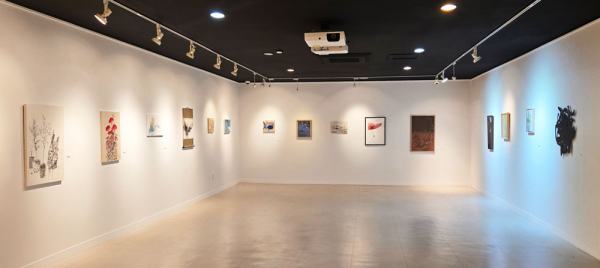
AI 시대, 다시 붓을 든다는 것제6회 동서미술문화학회 2025 기획전 인공지능이 이미지를 생성하고 문장을 완성하는 시대, 예술의 주체는 과연 누구인가. 기술이 창작의 영역 깊숙이 들어온 오늘, 인간의 손과 사유는 어떤 의미를 지닐 수 있을까. 이러한 질문을 중심에 두고 동서미술문화학회가 기획한 《AI 시대의 필묵–다시 잇다》전이 서울 삼청동의 한벽원미술관에서 2025년 12월24일~2026년 1월6일까지 열린다.기민정 - 빛과 움직임 / 70.0×70.0cm, 알루미늄판에 화선지, 먹, 2025이번 전시는 동서미술문화학회 제6회 기획전으로, 회원기획전과 후속세대 기획초대전으로 구성되었다. 전시 제목에 담긴 ‘다시 잇다’는 단절이 아닌 연결의 선언이다. 전통 필묵을 과거의 유산으로 고정시키는 대신, 디지털 환경 속에서 동시대적 언어로 재사유하려는 문제의식이 전반을 관통한다.노혜경 - 지나온 시간을 마주쳤을 때, 기꺼이 / 40.0×50.0cm, 장지에 혼합재료, 2025필묵, 재현을 넘어 사유의 언어로구인성 - Texture-이면의 초상 / 55.0×88.0cm, cutting & imprinted on the cardboard, 2025회원기획전에 참여한 작가들은 각기 다른 조형 언어로 필묵의 현재성을 탐색한다.구인성 작가는 반복된 선과 물성의 중첩을 통해 이미지의 ‘이면’을 드러낸다. 골판지에 화면을반복적으로 컷팅한 작품은 붓질의 흔적을 해체하면서도, 손의 개입이 남긴 시간성을 강조한다. 이는 기계적 반복과 인간적 노동의 경계를 사유하게 만드는 작업이다.안해경 - 유기적 관계8 / 72.0×60.0cm, 장지에 채색, 2023안해경 작가의 회화는 절제된 화면 속에 생명의 리듬을 담아낸다. 장지 위에 채색된 식물의 형상은 사실적 재현을 넘어서, 존재 간의 관계성과 균형을 은유한다. 화면에 배치된 여백과 작은 낙관은 동양 회화의 전통적 질서를 현대적으로 변주한 결과물이다.이지희 - 낯선 숲 / 46.0×46.0cm, 광목천에 수묵, 2025이지희 작가는 광목천에 수묵으로 그려낸 작업을 통해 선의 운동성과 공간감을 실험한다. 검은 화면 위를 유영하듯 흐르는 선들은 숲의 이미지이자, 감각의 기록이다. 붓의 속도와 멈춤이 만들어내는 리듬은 AI가 생성한 이미지와는 다른, 인간 신체의 호흡을 직접적으로 드러냈다고 볼 수 있겠다.박종갑 - 향_四方書 / 60.0×70.0cm, 주철, 2024후속세대, 필묵의 경계를 확장하다유하나 - 둘기습격4(Dulgi attack4) / 91.0×116.8cm, 한지+먹, 2021후속세대 기획초대전은 이번 전시의 또 다른 중요한 축이다.유하나 작가는 한지와 먹, 채색을 결합한 혼합 매체 작업을 통해 자연과 인공, 감각과 개념의 경계를 탐구한다. 화면 속 식물의 형상은 구체적이면서도 낯설며, 이는 자연을 인식하는 인간의 시선 자체를 되묻는 장치로 작동한다.고은진 - 만복도 / 120×72cm, 순지, 혼합, 2025고은진 작가는 전통 민화에서 주목 받았으나 수묵의 기법을 바탕으로 현대적 색감과 화면 구성을 시도한다. 만개한 매화나무를 그린 작품은 고전적 소재를 취하면서도, 과도한 서사를 배제한 채 시각적 밀도와 감각적 집중을 유도한다. 이는 필묵이 여전히 유효한 회화 언어임을 보여주는 사례다.이 외에도 후속세대 작가들은 필묵을 하나의 기법이 아닌, 사유의 방식이자 태도로 접근하며 전통의 확장 가능성을 제시한다.“이론과 창작이 만나는 자리”전시에 붙인 축사에서 이천시립월전미술관 학예연구실장 장준구는 동서미술문화학회의 활동을 이렇게 평가한다.그는 “동서미술문화학회는 미학과 미술사를 다루면서도 창작과 밀착된 연구를 지속해 온 보기 드문 학술 단체”라며, “회원전은 이론적 깊이를 바탕으로 한 작가 개인의 실증적 결과가 집약되는 의미 있는 자리”라고 밝혔다. 또한 “이번 전시는 AI 시대라는 현실적 조건 속에서 필묵 예술의 현재와 미래를 함께 사유할 수 있는 장”이라고 덧붙였다.이번 기획전은 명확한 결론을 제시하지 않는다. 대신 관람자에게 질문을 건넨다. 앞으로 그림을 그리는 주체는 누구이며, 우리는 무엇을 기준으로 이미지를 신뢰할 것인가. 기술이 만들어내는 무한한 이미지의 홍수 속에서, 붓으로 남긴 한 획의 의미를 다시 생각하게 만드는 전시다.《AI 시대의 필묵–다시 잇다》는 전통을 지키기 위한 전시가 아니라, 전통을 살아 있는 현재로 불러오는 시도다. 느림과 축적, 몸의 감각과 사유의 흔적이 여전히 유효한 가치임을, 조용하지만 분명하게 증명하고 있다.-글씨21Taking Up the Brush Again in the Age of AIThe 6th Dongseo Society for Art & Culture 2025 Curated ExhibitionIn an era in which artificial intelligence generates images and completes sentences, who, then, is the true subject of art? As technology penetrates deeply into the realm of creation, what meaning do the human hand and human thought still hold? Centered on these questions, Ink and Brush in the Age of AI – Reconnecting, curated by the Dongseo Society for Art & Culture, will be held at Hanbyeokwon Museum of Art in Samcheong-dong, Seoul, from December 24, 2025 to January 6, 2026.This exhibition marks the Society’s 6th curated exhibition and consists of a Members’ Exhibition and a Curated Invitational Exhibition for the Next Generation. The subtitle “Reconnecting” signals not a rupture, but a reconnection—an intentional effort to rethink traditional ink-and-brush art not as a relic of the past, but as a contemporary language situated within the digital environment. This critical perspective runs throughout the exhibition.Ink and Brush Beyond Representation: A Language of ThoughtArtists participating in the Members’ Exhibition explore the present relevance of ink and brush through diverse visual vocabularies.Gu In-seong reveals the “other side” of imagery through the repetition of lines and the layering of materiality. His works, created by repeatedly cutting cardboard surfaces, dismantle traces of brushwork while emphasizing the temporality left by human intervention. These pieces invite reflection on the boundary between mechanical repetition and human labor.An Hae-gyeong’s paintings embody the rhythm of life within restrained compositions. The plant forms rendered in color on traditional hanji transcend realistic depiction, instead suggesting relationships and balances among beings. The carefully arranged negative space and small seals subtly reinterpret the compositional order of traditional East Asian painting in a contemporary context.Lee Ji-hee experiments with the movement of lines and spatial perception through ink paintings on cotton fabric. Lines that drift across dark surfaces evoke both images of forests and records of sensation. The rhythm created by the speed and pauses of the brush distinctly reveals the breath of the human body—something fundamentally different from AI-generated imagery.The Next Generation: Expanding the Boundaries of Ink and BrushThe Curated Invitational Exhibition for the Next Generation forms another crucial axis of the show.Yoo Ha-na explores the boundaries between nature and the artificial, sensation and concept, through mixed-media works combining hanji, ink, and color. The plant forms in her works are both concrete and unfamiliar, functioning as devices that question the very way humans perceive nature.Ko Eun-jin, widely recognized for her work in traditional folk painting (minhwa), shifts her focus to ink-based techniques while experimenting with contemporary color and composition. Her paintings of blossoming plum trees adopt classical motifs while eliminating excessive narrative, instead encouraging visual density and concentrated perception. These works demonstrate that ink and brush remain a valid and vital pictorial language.In addition, the emerging artists in this section approach ink and brush not merely as techniques, but as modes of thinking and attitudes toward creation, presenting new possibilities for the expansion of tradition.“A Place Where Theory and Creation Meet”In his congratulatory message, Jang Jun-gu, Chief Curator of the Icheon Woljeon Museum of Art, offers the following assessment of the Dongseo Society for Art & Culture: “The Dongseo Society is a rare academic organization that continues research closely aligned with artistic practice while engaging deeply with aesthetics and art history. The Members’ Exhibition is a meaningful site where the theoretical depth of research is crystallized into the tangible, empirical outcomes of individual artists.” He further notes that “this exhibition provides an important platform for collectively reflecting on both the present and future of ink-and-brush art within the real conditions of the AI era.”Rather than presenting definitive conclusions, this curated exhibition poses questions to its audience: Who will be the subject of painting in the future, and by what standards will we trust images? Amid the flood of endlessly generated images produced by technology, the exhibition invites viewers to reconsider the meaning of a single brushstroke made by human hands.Ink and Brush in the Age of AI Reconnecting is not an exhibition that seeks merely to preserve tradition. Instead, it is an attempt to summon tradition into the living present, quietly yet clearly affirming that slowness, accumulation, bodily sensation, and traces of thought remain enduring and essential values.-Geulc21
-
[Review]
국제교류전-Postcalligraphy展 / 전시 1.8-1.14
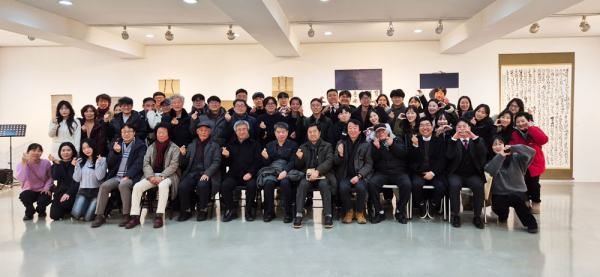
동아시아 서예의 현재를 묻다6인의 작가가 제시하는‘Postcalligraphy’라는 동시대적 질문2026년 1월8일부터 14일까지 서울 인사동 백악미술관에서 동아시아 서예의 현재와 미래를 가늠하는 국제 교류전 〈Postcalligraphy〉展이 열린다. 본 전시는 한국·대만·일본·말레이시아 4개국에서 활동하는 6인의 서예·전각 작가가 참여하는 국제전으로, 전통 서예의 형식과 개념을 넘어 동시대 예술로서 서예가 지닐 수 있는 확장 가능성을 심도 있게 조명한다.이번 전시는 단순한 국가 간 교류의 차원을 넘어, 서예(書藝)가 오늘날 어떤 의미를 가질 수 있는지, 그리고 동시대 예술 속에서 어떤 질문을 던질 수 있는지를 본질적으로 묻는다. ‘Postcalligraphy’라는 전시 제목은 서예 이후(以後)를 선언하기보다, 전통에 대한 깊은 이해를 전제로 그것을 새롭게 사유하고 재구성하려는 태도를 상징한다.‘Postcalligraphy’에서 ‘Post’는 단절이나 종언을 의미하지 않는다. 이는 과거의 서예를 극복하거나 폐기하려는 의도가 아니라, 전통을 현재의 시점에서 다시 읽고 동시대적 감각으로 확장하려는 적극적인 사유의 방향을 가리킨다.본 전시는 서예를 단순히 문자 기록의 기술이나 미적 형식으로 규정하지 않는다. 붓(筆)과 먹(墨), 종이(紙)와 칼(刀)이라는 물질적 매체를 통해 시간성(時間性), 신체성(身體性), 정신성(精神性), 그리고 언어와 공간의 관계가 어떻게 응축되고 발현되는지를 탐구한다. 이 과정에서 서예는 결과물이 아닌, 하나의 수행(修行)이자 사유의 장으로 제시된다.한국 작가 3인 필묵의 깊이와 동시대적 감각전시의 중심을 이루는 한국 작가 3인의 작업은 전통 필법(筆法)에 대한 깊은 이해를 바탕으로, 서예의 조형성과 정신성을 동시대적 언어로 확장한다.이완(李玩) 작가는 필획의 반복을 통해 시간성과 존재의 층위를 탐구한다. 그의 작업에서 먹은 단순한 색채가 아니라, 축적된 시간과 수행의 흔적이다. 화면 위에 중첩된 필획은 문자적 의미를 넘어 조형적 구조로 기능하며, 서예가 명상적이면서도 촉각적인 예술임을 드러낸다.정의방(鄭義邦) 작가는 행초(行草)의 속도감과 에너지를 통해 서예의 역동성(動態性)을 강조한다. 그의 작품은 획과 획 사이의 여백(餘白)을 단순한 공백이 아닌 긴장으로 가득 찬 공간으로 설정하며, 붓의 움직임 자체를 하나의 사건처럼 제시한다. 이는 서예가 고정된 형식이 아니라 살아 있는 시간의 흐름임을 보여준다.이신영(李信榮) 작가는 전통 필법의 견고함을 기반으로 문자 구조의 질서와 해체를 동시에 실험한다. 그의 작업에서 문자는 안정과 불안을 오가며 재배치되고, 서예는 회화적 조형 언어로 확장된다. 이는 전통 서예의 형식미를 존중하면서도 새로운 조형 가능성을 모색하는 시도로 읽힌다.국경을 넘는 서예,동아시아와 동남아의 확장된 시선해외 작가들의 작업은 서예가 특정 지역의 전통에 머무르지 않고, 인류 보편의 미학적 언어로 기능할 수 있음을 보여준다.대만의 덩권하오(鄧君浩) 작가는 물질성과 문자의 관계를 탐구하며, 서예를 시간·질감·존재의 예술로 확장한다. 그의 작업은 먹의 번짐과 종이의 변화를 통해 시간의 흔적과 존재의 물리적 감각을 드러내며, 서예를 하나의 실험적 시각 언어로 제시한다.일본의 시로마케이타(城間圭太) 작가는 문자 구조와 여백의 관계를 해체하며, 동아시아 전체를 관통하는 보편적 미학 언어를 탐색한다. 그의 작업은 전통 서예의 틀을 유지하면서도 현대 미술적 조형 감각을 적극적으로 수용하여, 서예의 새로운 표준 가능성을 제시한다.말레이시아의 원즈안(溫子安) 작가는 개인의 내면과 문화적 정체성을 서예적 언어로 풀어낸다. 그의 작품은 서예를 고백(告白)과 사유의 매체로 확장하며, 문자와 추상이 교차하는 지점을 통해 심리적 지도(Psychological Map)와 같은 서사를 구축한다.〈Postcalligraphy〉展이 제기하는 핵심 화두는 서예의 동시대성이다. 이는 단순히 현대적 형식을 차용한다는 의미가 아니라, 오늘의 삶과 사유를 어떻게 서예라는 매체로 담아낼 것인가에 대한 질문이다.참여 작가들은 서예를 기술적 완성도나 전통 계승의 문제로 환원하지 않는다. 오히려 서예를 삶의 태도이자 사유의 방식으로 확장하며, 동시대 예술이 요구하는 비판성과 실험성을 적극적으로 수용한다. 이 과정에서 서예는 회화, 조각, 설치, 수행적 행위의 성격까지 포괄하는 확장된 예술 장르로 기능한다.이번 전시는 서예가 더 이상 과거의 유산이나 보존의 대상에 머물지 않음을 분명히 보여준다. 전통은 고정된 형식이 아니라, 끊임없이 재해석되고 현재화될 때 비로소 살아 있는 힘을 획득한다.〈Postcalligraphy〉展은 동아시아 서예가 21세기라는 불확실성의 시대 속에서 어떻게 새로운 의미와 역할을 가질 수 있는지를 제시하는 중요한 사례다. 서로 다른 문화권과 작업 방식이 교차하는 이 전시는, 서예가 여전히 유효한 질문을 던질 수 있는 동시대 예술임을 조용하지만 단단하게 증명한다.이유미/ 객원기자/ theart21 전시 정보전시명: Postcalligraphy 展부제: 한국·대만·일본·말레이시아 6인 국제 서예·전각 교류전기간: 2026년 1월 8일(목) – 1월 14일(수) 12:00까지관람시간: 10:00 – 18:00장소: 백악미술관 1·2·3층 전관(서울특별시 종로구 인사동9길 16)Questioning the Present of East Asian CalligraphyA Contemporary Inquiry into “Postcalligraphy” by Six ArtistsFrom January 8 to 14, 2026, the international exchange exhibition 〈Postcalligraphy〉 will be held at Baekak Art Museum in Insa-dong, Seoul, offering a critical reflection on the present and future of East Asian calligraphy.This exhibition brings together six calligraphy and seal-engraving artists from four countries—Korea, Taiwan, Japan, and Malaysia—and closely examines the expanded possibilities of calligraphy as a form of contemporary art beyond its traditional forms and concepts.More than a simple cross-national exchange, the exhibition fundamentally asks what calligraphy can mean today, and what kinds of questions it can pose within contemporary art.The exhibition title Postcalligraphy does not declare an end to calligraphy; rather, it symbolizes an attitude of rethinking and reconfiguring tradition on the basis of a profound understanding of it.In Postcalligraphy, the prefix “post” does not signify rupture or termination. It does not aim to overcome or discard traditional calligraphy, but instead points toward an active mode of thinking that rereads tradition from the present moment and expands it through contemporary sensibilities.This exhibition does not define calligraphy merely as a technique of recording characters or as a formal aesthetic practice. Through material media such as brush, ink, paper, and knife, it explores how temporality, corporeality, spirituality, and the relationship between language and space are condensed and manifested. In this process, calligraphy is presented not as a final product, but as a form of practice—an arena of contemplation and discipline.Three Korean Artists: Depth of Brush and Ink with Contemporary SensibilityAt the core of the exhibition are the works of three Korean artists, who expand the formal and spiritual dimensions of calligraphy into a contemporary visual language grounded in a deep understanding of traditional brush techniques.Lee Wan explores layers of time and existence through repetitive brushstrokes. In his work, ink functions not merely as color but as an accumulation of time and traces of disciplined practice. The overlapping strokes operate beyond linguistic meaning, forming sculptural structures that reveal calligraphy as a meditative yet tactile art form.Jung Eui-bang emphasizes the dynamism of calligraphy through the speed and energy of semi-cursive and cursive scripts. In his works, the space between strokes is not an empty void but a field charged with tension, presenting the movement of the brush itself as an event. His practice demonstrates that calligraphy is not a fixed form but a living flow of time.Lee Shin-young experiments simultaneously with order and deconstruction within the structure of characters, based on the solidity of traditional brush methods. In his work, characters are rearranged between stability and instability, expanding calligraphy into a painterly visual language. This approach respects the formal beauty of traditional calligraphy while actively seeking new compositional possibilities.Calligraphy Beyond Borders: Expanded Perspectives from East and Southeast AsiaThe works of the international artists demonstrate that calligraphy is not confined to regional traditions, but can function as a universal aesthetic language.Taiwanese artist Deng Jun-Hao investigates the relationship between materiality and written form, expanding calligraphy into an art of time, texture, and existence. Through ink diffusion and the physical transformation of paper, his work reveals traces of time and embodied presence, presenting calligraphy as an experimental visual language.Japanese artist Shiroma Keita deconstructs the relationship between character structure and negative space, seeking a universal aesthetic language that traverses East Asia. While maintaining the framework of traditional calligraphy, his work actively embraces contemporary visual sensibilities, proposing new standards for calligraphy in the present.Malaysian artist Wen Zi-An articulates inner consciousness and cultural identity through calligraphic language. His works expand calligraphy into a medium of confession and reflection, constructing narrative structures akin to psychological maps at the intersection of text and abstraction.The central question posed by 〈Postcalligraphy〉 is the contemporaneity of calligraphy—not merely the adoption of modern forms, but how today’s life and modes of thinking can be embodied through the medium of calligraphy.The participating artists refuse to reduce calligraphy to technical mastery or the inheritance of tradition alone. Instead, they expand it into a way of life and a mode of thought, actively embracing the criticality and experimental spirit demanded by contemporary art. In this process, calligraphy functions as an expanded artistic field encompassing painting, sculpture, installation, and performative practice.This exhibition clearly demonstrates that calligraphy no longer remains a relic of the past or an object of preservation. Tradition is not a fixed form; it gains vitality only through continual reinterpretation and actualization in the present.〈Postcalligraphy〉 offers an important example of how East Asian calligraphy can acquire new meaning and roles amid the uncertainties of the 21st century. Through the intersection of diverse cultural backgrounds and artistic approaches, the exhibition quietly yet firmly proves that calligraphy remains a contemporary art form capable of posing relevant and enduring questions.Lee Yu-mi / Guest Reporter/ theart21Exhibition InformationTitle: PostcalligraphySubtitle: International Calligraphy & Seal Engraving Exchange Exhibition by Six Artists from Korea, Taiwan, Japan, and MalaysiaDates: January 8 (Thu) – January 14 (Wed), 2026 (until 12:00 PM on the final day)Hours: 10:00 AM – 6:00 PMVenue: Baekak Art Museum, 1st–3rd Floors(16, Insadong 9-gil, Jongno-gu, Seoul)
-
[Review]
제2회 한국서예 아트페어 / 전시 2.4-2.9
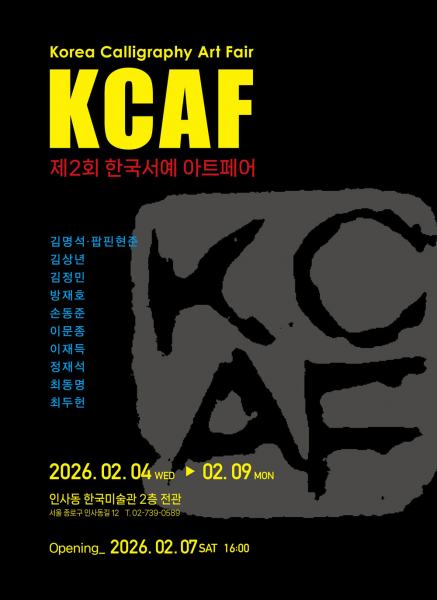
묵(墨痕)의 변주와 조형의 확장제2회 한국서예아트페어(KCAF), 서예의 현재를 묻다김상년(Kim Sang Nyeon)/달가루 솔2026-20_나 그대에게 모두 드리리/70.3×44.7전통은 보존의 대상일까, 아니면 동시대의 감각 속에서 끊임없이 새롭게 번역되어야 할 현재형 언어일까. 김상년(Kim Sang Nyeon)/달가루 솔2026-18_나 그대에게 모두 드리리/39.2×21.3제2회 한국서예아트페어(Korea Calligraphy Art Fair, KCAF)는 이 질문을 전시의 중심에 놓는다. 김명석(Kim Myung Seok)/영명(靈明)/80×50‘묵(墨痕)의 변주와 조형의 확장’을 화두로 삼은 이번 아트페어는, 서예가 지닌 고전적 규범과 정신을 출발점으로 삼아 동시대 미감, 다양한 매체, 현대미술의 조형 언어와 접속하려는 실험의 장이다.김명석(Kim Myung Seok)/Lively/45×65이번 전시는 2026년 2월 4일(수)부터 2월 9일(월)까지, 서울 인사동 한국미술관 2층 전관에서 열렸다. 손동준/無題/180×140전통 서예의 중심지이자 관광과 문화의 접점인 인사동에서 열리는 이번 행사는, 서예를 보다 넓은 대중에게 현재진행형의 예술로 제시한다는 점에서 의미를 더한다.손동준/無題/45.5×37.9서예, 문자의 예술에서 조형의 언어로서예는 본질적으로 문자의 예술이면서 동시에 몸의 예술이다.한 획이 화면에 놓이는 순간에는 필압과 속도, 작가의 호흡과 리듬이 응축된다. 방재호(Bang Jae Ho)/장자구먹은 단순한 색채가 아니라, 농담(濃淡)과 번짐, 마름과 스밈의 층위를 통해 시간의 밀도와 정서의 깊이를 드러내는 매개다. 김정민(Kim Jung Min)이번 한국서예아트페어는 이러한 묵의 물성과 서예의 정신성을 전통적인 지필묵(紙筆墨)의 틀에만 가두지 않고, 캔버스와 혼합 재료, 현대적 재료 등으로 확장하며 서예의 조형 가능성을 다각도로 탐색한다.전시는 서예의 현대성을 단순한 형식 변화에 국한하지 않는다. 이문종(Lee moon jong)/喫茶去/20×45익숙한 문자와 획을 낯설게 바라보는 ‘시선의 전환’이자, 동시대의 질문을 서예의 문법으로 번역해내는 창작 태도 자체가 이번 전시의 중요한 층위를 이룬다. 이문종(Lee moon jong)/竹/70×40관람자는 화면 위에 남겨진 묵의 흔적을 따라가며, 서예가 더 이상 과거의 유산에 머무르지 않고 현재의 언어로 호흡하고 있음을 체감하게 된다.방재호(Bang Jae Ho)/墨友雅會(自作詩)이번 KCAF에는 서로 다른 세대와 배경의 작가들이 함께 참여한다. 축적된 필력과 고전적 이해를 바탕으로 서예의 깊이를 다져온 중견 작가들과, 보다 실험적인 태도로 매체와 형식을 확장하는 작가들이 한자리에 모여 서예의 현재적 지형을 입체적으로 보여준다. 이재득(Lee Jae Deck)/백봉거사/31×115이는 전통과 현대, 문자성과 조형성, 평면과 공간이 서로 긴장하며 공존하는 장면을 만들어낸다.이재득(Lee Jae Deck)/이충무공 장검명문/35×159특히 주목할 점은 매체의 확장이다. 종이 위의 먹선에서 출발한 서예는 캔버스, 아크릴, 혼합 재료 등과 결합하며 회화적·조형적 언어로 확장된다. 최두헌(Choi Doo Heon)/同樂/60×93이는 서예가 더 이상 특정 장르에 고정된 형식이 아니라, 동시대 미술의 문법과 적극적으로 대화할 수 있는 열린 언어임을 보여준다.최동명(Choi Dong Myeoung)/봄 여름 가을 겨울전통은 여기서 단절된 과거가 아니라, 새로운 재료와 감각을 통해 끊임없이 갱신되는 살아 있는 현재가 된다.제2회 한국서예아트페어는 한국 서예의 다양한 흐름과 스펙트럼을 한 자리에서 조망할 수 있는 기획형 아트페어다. 최동명(Choi Dong Myeoung)/나는 너에게 아무말도 하지 않았다이번 전시에는 김명석(金明石), 김상년(金相年), 김정민(金廷玟), 방재호(房載浩), 손동준(孫東俊), 이문종(李文鍾), 이재득(李在得), 정재석(鄭在錫), 최동명(崔東明), 최두헌(崔斗憲), 팝핀현준(Poppin Hyun Joon) 등 다양한 배경의 작가들이 참여해, 전통 서예에서 현대적 조형 실험에 이르는 폭넓은 지형을 구성했다.정재석(Jeong Jae Seok)/화하(花下)/35×68이번 행사는 작품 전시를 넘어, 서예가 오늘의 미술 환경 속에서 어떤 질문을 던질 수 있는지, 그리고 문자와 획이 동시대 시각문화와 어떻게 접속할 수 있는지를 모색하는 장이기도 하다. 아트페어 형식을 통해 관람객은 전시를 감상하는 데 그치지 않고, 서예를 하나의 ‘동시대 미술 언어’로 체험하는 기회를 갖게 된다.정재석(Jeong Jae Seok)/진기심(盡其心)/80.5×52.5제2회 한국서예아트페어는 전통과 현대, 문자와 조형, 세대와 감각이 서로를 비추는 거울이다. 이번 전시는 서예를 ‘보존해야 할 유산’이 아니라 ‘동시대의 언어’로 다시 읽어내며, 묵의 흔적이 오늘의 감각 속에서 어떻게 새로운 의미와 형상으로 변주되는지를 보여준 서예가 여전히 현재진행형의 예술임을 확인하게 하는 장이 될 것이다.이유미/객원기자Variations of Ink Traces and the Expansion of FormThe 2nd Korea Calligraphy Art Fair (KCAF) Questions the Present of CalligraphyIs tradition something to be preserved, or is it a living language that must be continually retranslated through contemporary sensibilities?The 2nd Korea Calligraphy Art Fair (KCAF) places this question at the center of the exhibition. With “Variations of Ink Traces and the Expansion of Form” as its guiding theme, this art fair serves as an experimental platform that takes the classical rules and spirit of calligraphy as its point of departure, while seeking points of contact with contemporary aesthetics, diverse media, and the formal language of modern art.This exhibition was held from February 4 to February 9, 2026, on the entire second floor of the Korea Art Museum in Insadong, Seoul. Taking place in Insadong, a district that functions both as a center of traditional calligraphy and as a crossroads of tourism and culture, the event carries added significance in presenting calligraphy to a broader public as an art form that continues to exist in the present tense.Calligraphy, From the Art of Letters to the Language of FormCalligraphy is, in essence, both the art of writing and the art of the body. In the moment a single stroke is placed on the surface, pressure and speed, the artist’s breath and rhythm, are condensed into that instant. Ink is not merely a color; through gradations of density, bleeding, drying, and permeation, it reveals layers of temporal depth and emotional resonance. This edition of the Korea Calligraphy Art Fair does not confine the materiality of ink and the spirit of calligraphy within the traditional framework of brush, ink, and paper, but expands them through canvases, mixed media, and contemporary materials, exploring the sculptural possibilities of calligraphy from multiple perspectives.The exhibition does not limit the modernity of calligraphy to changes in outward form alone. Rather, it foregrounds a “shift in perspective” that renders familiar characters and strokes newly strange, and highlights a creative attitude that translates the questions of the present era into the grammar of calligraphy. As viewers follow the traces of ink left on the surface, they come to sense that calligraphy no longer remains a legacy of the past, but breathes as a living language of the present.Artists of different generations and backgrounds come together in this edition of KCAF. Mid-career artists, who have deepened the density of calligraphy through accumulated mastery and classical understanding, and artists who expand media and form through more experimental approaches, gather in one place to present a multidimensional view of the current terrain of calligraphy. This creates a scene in which tradition and modernity, textuality and form, the flat surface and spatiality coexist in dynamic tension.A particularly noteworthy aspect of the exhibition is the expansion of media. Calligraphy, which begins with ink lines on paper, extends into painterly and sculptural language through its encounter with canvas, acrylics, and mixed materials. This demonstrates that calligraphy is no longer confined to a fixed genre, but functions as an open language capable of engaging actively with the grammar of contemporary art. Here, tradition is not a severed past, but a living present that is continually renewed through new materials and sensibilities.The 2nd Korea Calligraphy Art Fair is a curated art fair that offers a panoramic view of the diverse currents and spectrum of Korean calligraphy. Participating artists include Kim Myung Seok (金明石), Kim Sang Nyeon (金相年), Kim Jung Min (金廷玟), Bang Jae Ho (房載浩), Son Dong Jun (孫東俊), Lee Moon Jong (李文鍾), Lee Jae Deuk (李在得), Jeong Jae Seok (鄭在錫), Choi Dong Myeong (崔東明), Choi Doo Heon (崔斗憲), and Poppin Hyun Joon, forming a broad landscape that spans from traditional calligraphy to contemporary formal experimentation.Beyond the presentation of artworks, this event also serves as a space to explore what kinds of questions calligraphy can pose within today’s art environment, and how characters and strokes can connect with contemporary visual culture. Through the format of an art fair, visitors are offered an opportunity not only to view the exhibition, but to experience calligraphy as a form of contemporary artistic language.The 2nd Korea Calligraphy Art Fair stands as a mirror reflecting tradition and modernity, text and form, generations and sensibilities. Reframing calligraphy not as a heritage to be preserved but as a language of the present, this exhibition shows how traces of ink are transformed into new meanings and forms within contemporary perception, affirming calligraphy as an art form that continues to exist in the present tense.Lee Yu-mi / Guest Reporter
-
[Review]
하늘의 마음을 돌에 새기다 / 전시 1.12-1.21
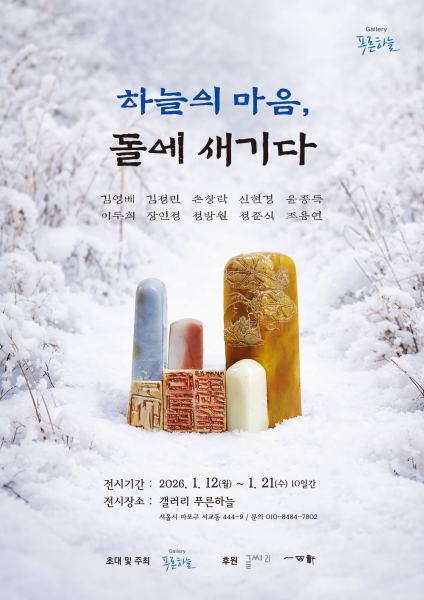
하늘의 마음을 돌에 새기다전각 10인의 초대전 2026년 1월 12일부터 21일까지 서울 마포구 서교동에 위치한 갤러리 푸른하늘에서 전각(篆刻) 예술가 10인(김영배, 김정민, 손창락, 신현경, 윤종득, 이두희, 장인정, 정방원, 정준식, 조용연) 의 초대전 〈하늘의 마음, 돌에 새기다〉가 열린다. 이번 전시는 서예의 한 갈래이자 동시에 공예적 성격을 지닌 전각 예술을 단일 장르로 조명하는 드문 기획으로, 최근 보기 힘들어진 전각 전시의 공백 속에서 더욱 의미 있는 자리로 다가온다.갤러리 푸른하늘은 조각보, 자수 등 한국 전통공예를 중심으로 한 전시에 주력해온 특화 갤러리다. 회화 중심의 화랑 구조 속에서 공예와 전통 예술의 정체성을 꾸준히 탐구해온 공간으로, 이번 전각전 역시 그러한 방향성과 맞닿아 있다. 전각은 문자 예술이라는 점에서 서예에 속하지만, 칼과 돌이라는 물성과 손의 노동을 전면에 드러낸다는 점에서 공예적 성격 또한 강하게 지닌다. 이러한 이유로 전각은 오래전부터 서예와 공예의 경계에 놓여 있었으나, 그 독자적 예술성에 비해 전시 기회는 상대적으로 많지 않았다.이번 전시가 더욱 주목되는 이유는 바로 이러한 현실적 맥락 때문이다. 전각 예술만을 독립적으로 다루는 전시는 국내에서 극히 드물며, 기획자와 전시 공간을 찾는 것 또한 쉽지 않다.2022년 이전까지만 해도 종로구 북촌에 위치한 갤러리 일백헌을 중심으로 국제전과 다수의 전각 기획전이 이어진 바 있으나, 최근 들어 무슨 이유에서인지 전각 단독 기획전이나 개인 초대전은 거의 자취를 감춘 상황이다. 이러한 흐름 속에서 갤러리 푸른하늘에서 열리는 이번 전시는 마치 메마른 하늘에 내리는 단비처럼 반갑게 느껴진다.전각은 단순히 문자를 새기는 기술이 아니다. 문자에 대한 깊은 이해와 서예적 본질, 그리고 조형 감각이 결합된 종합 예술이다. 작가는 칼끝으로 돌을 파내며 한 획 한 획을 만들어간다. 이 과정은 단순한 제작 행위를 넘어, 사유를 응축하고 정신을 정제하는 수행의 시간에 가깝다. 붓 대신 칼을 들고, 종이 대신 돌을 마주하는 전각의 세계는 문자라는 추상적 개념을 가장 물질적인 방식으로 구현해 낸다.돌에 새겨진 문자는 단단하고 침묵 속에 머무르지만, 그 안에는 작가의 정신과 사유, 그리고 동양적 세계관이 고스란히 담긴다. 문자와 조형, 여백과 균형, 음각과 양각의 대비는 전각만의 독특한 미학을 형성한다. 이는 서예가 지닌 필획의 율동과는 또 다른 긴장감을 만들어내며, 공예가 지닌 손의 감각과 시간성을 자연스럽게 드러낸다.이번 초대전에는 각기 다른 조형 언어와 철학을 지닌 전각 작가 10인이 참여한다. 이들은 각자의 방식으로 문자를 해석하고, 돌이라는 재료 위에 자신만의 세계를 구축해 왔다. 전시장에는 전각 작품뿐만 아니라, 이를 둘러싼 다양한 설치와 전시 구성이 함께 어우러져 관람객이 전각을 보다 입체적으로 이해할 수 있도록 돕는다. 작은 인장 하나에 응축된 조형성과 정신성이 전시장 곳곳에서 조용하지만 깊은 울림을 만들어낸다.갤러리 푸른하늘이라는 공간 역시 이번 전시의 중요한 요소다. 공예 중심의 전시 경험을 축적해온 이 공간은 전각의 물성과 조형성을 자연스럽게 받아들이며, 작품과 공간 사이의 긴장감을 절제된 방식으로 풀어낸다. 전통과 현대, 서예와 공예, 정신성과 물질성이 교차하는 지점에서 전각은 비로소 현재형의 예술로 호흡한다.이번 전시는 갤러리 푸른하늘의 오정민 관장의 기획으로 진행되며, 글씨21과 갤러리 일백헌의 후원으로 마련되었다. 전각 예술을 꾸준히 지지해 온 이들의 협력은 단순한 전시 개최를 넘어, 전각이 다시 동시대 미술의 장으로 진입할 수 있는 계기를 마련한다는 점에서 의미가 깊다.〈하늘의 마음, 돌에 새기다〉는 화려함보다는 깊이를, 속도보다는 시간을 선택한 전시다. 돌을 마주하고 칼을 들며 사유를 새겨온 전각가들의 작업은 관람객에게 묵직한 질문을 던진다. 오늘날 우리는 무엇을 새기고, 무엇을 남길 것인가. 조용하지만 단단한 전각의 언어는 그 질문에 대한 하나의 응답으로, 오래도록 마음에 남을 것이다.-글씨21Inscribing the Mind of Heaven into StoneAn Invitational Exhibition of 10 Seal Engraving ArtistsFrom January 12 to 21, 2026, the invitational exhibition Inscribing the Mind of Heaven into Stone will be held at Gallery Pureunhaneul, located in Seogyo-dong, Mapo-gu, Seoul. The exhibition features ten seal engraving (篆刻, Jeongak) artists—Kim Young-bae, Kim Jung-min, Son Chang-rak, Shin Hyun-kyung, Yoon Jong-deuk, Lee Doo-hee, Jang In-jung, Jung Bang-won, Jung Jun-sik, and Cho Yong-yeon. As a rare exhibition devoted exclusively to seal engraving, an art form situated within calligraphy yet deeply rooted in craft, this show holds particular significance amid the recent scarcity of exhibitions dedicated to the genre.Gallery Pureunhaneul is a specialized space that has consistently focused on Korean traditional crafts such as jogakbo (patchwork wrapping cloths) and embroidery. Within an art scene largely centered on painting, the gallery has steadily explored the identity and value of traditional and craft-based practices. This exhibition of seal engraving aligns closely with that vision. While seal engraving belongs to the realm of calligraphy as a form of textual art, it also possesses a strong craft-oriented character, foregrounding materiality and manual labor through the use of knife and stone. Positioned for centuries at the boundary between calligraphy and craft, seal engraving has nonetheless had relatively few opportunities for exhibition despite its distinct artistic merit.The significance of this exhibition becomes even clearer within this broader context. Exhibitions devoted solely to seal engraving are exceedingly rare in Korea, and finding both curators and venues willing to support such projects has proven difficult. Until around 2022, Gallery Ilbaekheon in Bukchon, Jongno-gu, organized several seal engraving exhibitions, including international shows. In recent years, however, curated exhibitions and solo invitational shows dedicated to seal engraving have all but disappeared. Against this backdrop, the exhibition at Gallery Pureunhaneul feels like a long-awaited rain after a prolonged drought.Seal engraving is far more than a technical act of carving characters. It is a comprehensive art form that integrates a profound understanding of written language, the essential principles of calligraphy, and a refined sense of form. With each stroke carved into stone by the tip of a blade, the artist engages in a process that transcends mere craftsmanship, approaching instead a disciplined practice of contemplation and refinement of thought. Replacing brush with knife and paper with stone, seal engraving renders the abstract nature of language in its most tangible, material form.The characters carved into stone remain silent and solid, yet they contain within them the artist’s spirit, reflections, and an Eastern philosophical worldview. The interplay of character and form, balance and negative space, intaglio and relief carving generates a distinctive aesthetic unique to seal engraving. This produces a tension unlike the rhythmic movement of brushwork in calligraphy, while naturally revealing the sense of touch and temporality inherent to craft.This invitational exhibition brings together ten artists, each possessing a distinct formal language and artistic philosophy. Through their individual interpretations of written characters, they have each constructed a unique world upon stone. Alongside the seal engravings themselves, the exhibition incorporates various installations and display strategies that allow viewers to engage with the art form more fully. Within each small seal lies a concentrated sense of form and spirit, resonating quietly yet deeply throughout the gallery space.The gallery itself plays a vital role in the exhibition. With its accumulated experience in presenting craft-centered exhibitions, Gallery Pureunhaneul embraces the material and sculptural qualities of seal engraving, mediating the relationship between artwork and space with restraint and clarity. At the intersection of tradition and contemporaneity, calligraphy and craft, spirituality and materiality, seal engraving here breathes as an art of the present.Curated by Director Oh Jung-min of Gallery Pureunhaneul, the exhibition is supported by Geulc21 and Gallery Ilbaekheon. The collaboration among institutions and individuals who have long supported seal engraving goes beyond the staging of a single exhibition, offering instead a meaningful opportunity for the art form to reenter the arena of contemporary art.Inscribing the Mind of Heaven into Stone is an exhibition that chooses depth over spectacle and time over speed. The works of these seal engraving artists—who face stone with blade in hand, carving thought into form—pose a quiet yet weighty question to the viewer: What do we choose to inscribe today, and what will remain? The language of seal engraving, restrained yet resolute, offers one possible answer—one that lingers long after the exhibition ends.-Geulc21
-
[Preview]
평강 임봉규 개인전 / 전시 3.4-9
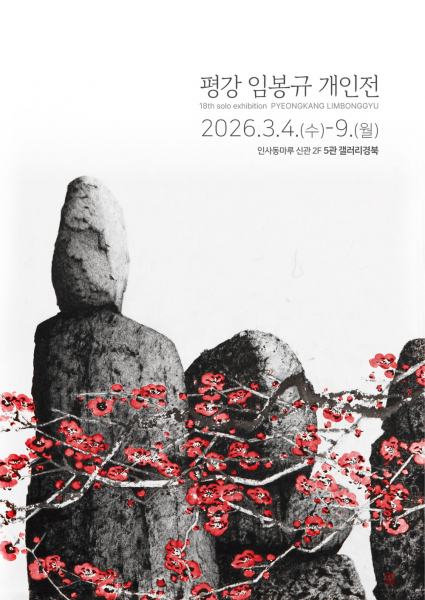
돌 위에 피어난 기원(祈願)평강 임봉규 18회 개인전, 전통 문인화의 동시대적 확장 모색3월 4일부터 9일까지, 종로 인사동 갤러리 경북달 품은 / 한지, 수먹 / 36×48서울 인사동 갤러리 경북에서 오는 3월 4일부터 9일까지 평강 임봉규의 18회 개인전이 열린다. 바람 / 한지, 수먹, 아크릴물감 / 32×382020년부터 지속해 온 ‘돌그림’ 연작을 중심으로 구성된 이번 전시는 전통 문인화가 오늘의 사회와 어떻게 만날 수 있는지를 묻는 자리다.빛 / 한지, 수먹, 아크릴물감 / 32×38문인화는 오랜 시간 ‘정신성’과 ‘사의(寫意)’의 미학을 바탕으로 이어져 온 전통 회화 장르다.그러나 급변하는 현대 사회 속에서 그 접점은 상대적으로 약하게 인식되어 왔다. 달빛 / 한지, 수먹, 아크릴물감 / 32×38임봉규는 이 지점에서 가장 일상적이면서도 보편적인 소재인 ‘돌’을 화면 중심에 세운다. 자연 속 돌이자, 인간 마음에 놓인 돌이다.봄 / 한지, 수먹, 아크릴물감 / 32×38작가는 돌에 담긴 염원과 바람, 사랑과 희망의 서사를 전통 수묵의 사의적 필선과 현대적 사실 묘사를 결합해 구현한다. 기도 / 한지, 수먹 / 32×38된먹을 쌓아 올리듯 점묘한 돌의 질감은 세월의 축적과 존재의 무게를 드러내고, 화면을 가로지르는 매화 가지는 긴 기다림 끝에 피어나는 생명의 상징으로 자리한다.맑음 1 / 한지, 수먹 / 32×38흑백 수묵의 깊이 위에 선명하게 얹힌 붉은 매화는 절제된 화면 속에서 더욱 강렬한 생명력을 발산한다.맑음 2 / 한지, 수먹 / 32×38전시는 크게 세 갈래로 구성된다. 첫 번째는 사의적 필선과 여백의 미를 중심으로 한 전통 수묵 문인화다.정신성과 상징성을 기반으로 한 정통 문인화의 조형 언어를 제시한다.평안 / 한지, 수먹채색 / 32×38두 번째는 돌의 구조와 질감을 사실적으로 묘사한 작품들로, 수묵의 농담과 현대적 공간감을 결합해 화면의 밀도를 높였다. 바람 2 / 한지, 수먹채색 / 32×38세 번째는 전통과 현대의 융합을 보여주는 작업들이다. 사의성과 사실성이 공존하며, 상징적 소재를 통해 동시대적 메시지를 확장한다.연시우퇴홍 / 한지, 수먹채색 / 32×38매화와 더불어 대나무, 버들잎, 연꽃 등 상징적 소재도 화면을 구성한다. 사시사철 푸르름을 지닌 대나무는 변치 않는 절개와 심성을, 연꽃은 정화와 생명의 순환을 의미한다. 5월의 / 한지, 수먹채색 / 32×38이들 요소는 음과 양처럼 대비되면서도 상생의 관계를 이루며, 내면의 평안과 희망을 시각적으로 풀어낸다.임봉규의 ‘돌그림’은 단순한 자연 재현을 넘어선다. 그것은 현대인의 삶 속에 스며든 기원과 기다림, 그리고 다시 시작을 향한 의지를 담아낸 회화적 기록이다. 달품은 2 / 한지, 수먹, 아크릴물감 / 36×48전통 문인화의 정신을 지키면서도 동시대의 조형 언어를 적극적으로 수용한 이번 전시는, 문인화의 사회적·문화적 확장 가능성을 가늠해보는 계기가 될 것으로 보인다.이른 봄, 돌 위에 피어난 매화처럼. 전통은 멈춰 있는 유산이 아니라, 오늘의 감각 속에서 다시 숨 쉬는 현재형의 언어임을 확인하는 자리다.평강 임봉규계명대학교 미술대학 서예과 대구가톨릭교육대학원 미술교육개인전 18회 서울 대구스위스 취리히 아트페어 2014대한민국미술대전 심사대구광역시미술대전 심사광주미술대전 심사울산미술대전 심사성산미술대전 심사신라미술대전 심사매일서예문인화대전 심사고신대학교 미술대학 외래교수현)한국미술협회 이사대구미술협회 부회장대구경북서예가협회 부회장동지묵연 회장한붓동인 회장한국예총 칠곡지회 사무국장pyengkang1234@daum.net010-7939-3153-이유미/객원기자- theart21@naver.comBlossoms of Prayer on StonePyeongkang Lim Bonggyu’s 18th Solo Exhibition Explores the Contemporary Expansion of Literati Ink PaintingMarch 4–9, 2026 | Gallery Gyeongbuk, Insadong, SeoulPyeongkang Lim Bonggyu will hold his 18th solo exhibition from March 4 to 9, 2026, at Gallery Gyeongbuk in Insadong, Seoul. Centered on his ongoing Stone Painting series, which began in 2020, the exhibition examines how traditional Korean literati ink painting can engage meaningfully with contemporary society.Literati painting, long grounded in spiritual depth and the aesthetics of saui (expressive suggestion), has often been regarded as distant from the realities of modern life. Lim addresses this perception by placing an elemental and universally resonant subject at the center of his work: the stone. Both a natural object and a metaphor for the emotional weight carried within the human heart, the stone becomes a vessel for wishes, devotion, longing, love, and hope.Through the fusion of expressive ink lines and modern realist depiction, the artist renders the textured surfaces of stone with layered washes and dense ink modulation. The accumulated strokes evoke the passage of time and the gravity of existence. Across these silent forms stretch branches of plum blossoms—symbols of renewal that bloom after a long winter’s wait. Set against the restrained monochrome of ink, the vivid red petals radiate a striking vitality.The exhibition unfolds in three thematic sections. The first presents traditional literati ink paintings that emphasize calligraphic brushwork and the beauty of negative space, reaffirming the spiritual and symbolic language of classical aesthetics. The second focuses on works that depict the structure and texture of stone with heightened realism, combining subtle ink gradations with a contemporary sense of spatial depth. The third section highlights the coexistence of tradition and modernity, where expressive abstraction and representational detail converge, expanding the formal and conceptual possibilities of literati painting.In addition to stones and plum blossoms, symbolic motifs such as bamboo, willow leaves, and lotus flowers appear throughout the exhibition. Evergreen bamboo embodies integrity and constancy; the lotus suggests purification and rebirth. These contrasting yet complementary elements create a visual harmony reminiscent of yin and yang, forming a narrative of inner peace, aspiration, and renewal.Lim’s Stone Painting series moves beyond the mere depiction of nature. It is a visual meditation on the hopes and quiet prayers embedded in contemporary life. By preserving the spiritual essence of literati painting while embracing modern visual language, this exhibition proposes new social and cultural dimensions for the genre.Like plum blossoms emerging upon stone in early spring, tradition here is not a static inheritance, but a living language—one that continues to breathe and evolve in the present.Lee Yu-mi / Guest Reporter
-
[News]
칸옥션 41회 경매, 현대 서예 작품 강세, 검여 유희강 2900만원 낙찰
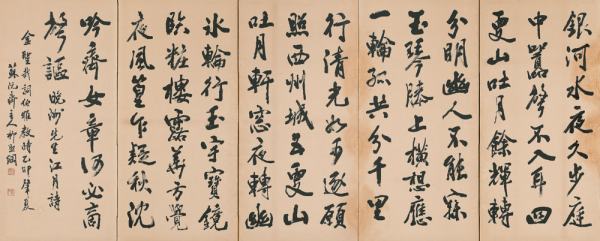
서예 작품을 꾸준히 소개해 온 칸옥션이 최근 진행한 제41회 경매에서 현대 서예가들의 작품이 잇따라 높은 가격에 낙찰되며 서예 시장의 관심을 다시 한 번 확인시켰다.회화 중심으로 움직이는 국내 미술 경매 시장 속에서 서예 작품이 안정적인 거래 흐름을 보이며 존재감을 드러냈다는 점에서 의미 있는 경매로 평가된다.이번 경매에서는 한국 현대 서예를 대표하는 작가들의 작품이 다수 출품되어 컬렉터들의 관심을 모았다. 검여 유희강(柳熙綱) / 강월 江月: 만주 정창주 晩州 鄭昌胄 시 / 1975년(을묘) / 종이에 먹 / 102.7×50cm×10 / 29,000,000특히 검여 유희강의 행초서 10폭 병풍 작품이 2900만원에 낙찰되며 이번 경매에서 서예로는 가장 높은 가격을 기록했다. 유희강은 전통 서예의 필법을 바탕으로 힘차고도 유려한 필세를 보여주는 서예가로 평가받는다. 이번에 출품된 작품 역시 행서와 초서가 어우러진 자유로운 필치와 균형 잡힌 구성으로 높은 완성도를 보여주며 응찰 경쟁을 이끌어냈다.평보 서희환(徐喜煥) / 고난을 박차고 / 1980년 / 종이에 먹 / 134.5×33.2cm×5 / KRW 10,500,000한글 서예 작품 역시 눈길을 끌었다. 평보 서희환의 한글 서예 작품은 1050만원에 낙찰되며 한글 서예에 대한 꾸준한 시장 수요를 확인시켰다. 서희환은 한글 서예의 조형성과 현대적 감각을 조화롭게 풀어내는 작가로 알려져 있으며, 작품의 힘 있는 필획과 단정한 구성미가 컬렉터들의 관심을 끌었다.여초 김응현(金膺顯) / 중용 中庸 제1장 / 1983년(계해) / 종이에 먹 / 120×28.7cm×8 / KRW 3,600,000한국 현대 서예의 거장으로 평가받는 여초 김응현의 작품도 경매에 등장했다. 이번 경매에 출품된 8폭 작품은 360만원에 낙찰되며 안정적인 거래 흐름을 보였다. 김응현은 한국 서예의 정체성과 예술성을 확립하는 데 중요한 역할을 한 인물로 평가되며, 그의 작품은 꾸준히 수집가들의 관심을 받아왔다.갈물 이철경(李喆卿) / 이강혁 李康爀 (1884-1964) 선생의 회갑에 올리는 글 / 1944년(갑신) / 종이에 먹 / 91.5×29.1cm×8 / KRW 4,000,000또한 갈물 이철경의 한글 서예 작품도 400만원에 낙찰되며 의미 있는 거래를 기록했다. 이철경은 전통 서예의 필법을 바탕으로 한글 서예의 조형적 가능성을 탐구해 온 작가로, 담백하면서도 개성적인 서체가 특징이다.칸옥션은 국내 경매사 가운데서도 서예 작품을 적극적으로 소개하고 있는 경매회사로 알려져 있다. 일반적인 미술 경매가 회화와 조각 중심으로 구성되는 것과 달리, 칸옥션은 서예 작품을 꾸준히 경매에 출품하며 서예 시장의 활성화를 이끌고 있다.특히 한글 서예와 전통 한문 서예 작품이 함께 거래되며 다양한 컬렉터층이 형성되고 있다는 점도 특징이다. 최근 미술 시장에서는 한국적 정체성을 지닌 작품에 대한 관심이 높아지고 있는데, 서예 작품 역시 이러한 흐름 속에서 다시 주목받고 있다는 분석이 나온다.미술계 관계자는 “서예는 한국 미술의 중요한 축임에도 불구하고 시장에서는 상대적으로 저평가된 측면이 있었다”며 “최근 경매에서 꾸준한 거래가 이루어지면서 서예 작품의 가치가 점차 재조명되고 있다”고 말했다.한편 칸옥션은 앞으로도 다양한 서예 작품을 지속적으로 소개하며 서예 컬렉터층을 확대해 나갈 계획이다. 전통 서예와 한글 서예를 아우르는 작품들이 꾸준히 경매에 등장하면서 서예 시장의 새로운 흐름이 이어질지 주목된다. -글씨21/자료제공 칸옥션-Kan-Auction 41th Sale Highlights Strength of Contemporary Korean CalligraphyYoo Hee-kang’s Ten-Panel Calligraphy Screen Sells for 29 Million KRWKan-Auction, known for consistently introducing calligraphy works in its sales, once again demonstrated strong market interest in contemporary Korean calligraphy at its 41th auction. Several works by modern calligraphers achieved notable prices, reaffirming the continued presence of calligraphy in the domestic art market, which has traditionally been dominated by painting and sculpture.The auction featured works by prominent figures in modern Korean calligraphy, attracting significant attention from collectors. Among them, a ten-panel folding screen in semi-cursive script by Geomyeo Yoo Hee-kang achieved the highest price of the sale, selling for 29 million KRW after competitive bidding. Yoo Hee-kang is widely recognized for his powerful yet refined brushwork rooted in classical calligraphic traditions. The work presented in this auction displayed a harmonious blend of semi-cursive and cursive scripts, characterized by free-flowing strokes and balanced composition, which drew strong interest from bidders.Hangul calligraphy also attracted considerable attention during the auction. A Hangul calligraphy work by Pyeongbo Seo Hee-hwan sold for 10.5 million KRW, demonstrating the steady demand for works in the Korean script tradition. Seo Hee-hwan is known for combining the structural beauty of Hangul with a modern aesthetic sensibility, and the work’s bold brushstrokes and composed structure appealed strongly to collectors.Another notable highlight was a work by Yeocho Kim Eung-hyeon, widely regarded as a master of modern Korean calligraphy. His eight-panel calligraphy screen was sold for 3.6 million KRW, reflecting stable market interest in his works. Kim Eung-hyeon played a pivotal role in establishing the artistic identity and aesthetic value of Hangul calligraphy, and his works continue to be sought after by collectors.In addition, a Hangul calligraphy work by Gal-mul Lee Cheol-gyeong was sold for 4 million KRW, marking another meaningful transaction during the auction. Lee Cheol-gyeong is recognized for exploring the visual possibilities of Hangul calligraphy based on traditional brush techniques, and his works are known for their restrained yet distinctive style.Kan-Auction has established itself as one of the few auction houses in Korea that actively introduces calligraphy works to the market. Unlike many art auctions that primarily focus on paintings and sculptures, K-Auction has consistently included calligraphy in its sales, contributing to the expansion and revitalization of the calligraphy market.The auction also highlighted the coexistence of Hangul calligraphy and traditional Chinese-character calligraphy, indicating the emergence of a diverse collector base. In recent years, the art market has shown increasing interest in works that reflect Korean cultural identity, and calligraphy is increasingly being reconsidered within this context.An art market observer commented, “Although calligraphy is a fundamental pillar of Korean art, it has historically been undervalued in the market. However, with steady transactions at auctions, the value of calligraphy works is gradually being re-evaluated.”Kan-Auction plans to continue presenting a wide range of calligraphy works in future sales while expanding the community of collectors interested in the art form. As both traditional and Hangul calligraphy continue to appear in auctions, attention is growing as to whether these developments will further shape new trends in the calligraphy market. -Geulc21 / Source: Kan-Auction-
-
[Review]
민화와 현대서예의 만남 ‘마에스트로 MAESTRO’ 특별기획전 개최
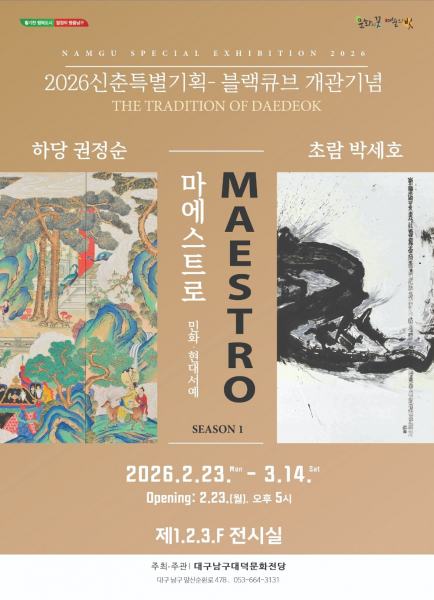
민화와 현대서예의 만남‘마에스트로 MAESTRO’ 특별기획전 개최대구 남구 대덕문화전당이 2026년 신춘 특별기획전으로 민화와 현대서예의 만남을 선보이는 전시 ‘마에스트로(MAESTRO)’를 개최했다. 이번 전시는 대덕문화전당 블랙큐브 개관을 기념하는 첫 기획전으로, 전통 민화와 현대 서예가 만나 새로운 미적 가능성을 제시하는 자리다. 전시는 2026년 2월 23일부터 3월 14일까지 대덕문화전당 제1·2·3·F 전시실에서 진행된다.이번 전시는 한국 민화의 전통을 현대적으로 재해석해 온 하당 권정순 작가와 현대서예·서예 퍼포먼스 분야에서 활발한 활동을 펼쳐온 초람 박세호 작가가 함께 참여했다. 민화 작가이자 연구자인 권정순은 오랜 기간 민화의 전통을 계승하며 현대적 감각으로 확장해 온 작가로, 한국민화협회 부회장과 계명대학교 한국민화연구소 소장을 역임하며 민화의 학술적·예술적 발전에도 기여해 왔다. 그의 작품은 전통 민화의 상징성과 색채를 바탕으로 현대적 감각을 더해 새로운 민화의 세계를 구축했다는 평가를 받고 있다. 현대서예가 박세호는 계명대학교 미술대학 서예과와 동대학원 졸업했으며 29여회의 개인전을 연 바 있다. 서예 퍼포먼스 아티스트로서 문자와 이미지의 경계를 넘나드는 작업을 선보여 온 그의 작업은 글씨를 단순히 읽는 대상이 아니라 ‘보는 이미지’로 전환시키며, 서예의 표현 영역을 확장하는 실험적인 작품 세계로 주목받고 있다. 이번 전시는 민화와 현대서예라는 서로 다른 장르가 만나 전통과 현대, 회화와 문자, 정적인 이미지와 역동적인 퍼포먼스가 교차하는 예술적 대화를 펼친다. 두 작가의 작품은 각기 다른 예술적 언어를 통해 인간의 삶과 자연, 그리고 시간의 흐름을 담아내며 관람객에게 깊은 울림을 전달한다. 특히 전시는 민화 특유의 민족성과 색채, 그리고 현대서예의 강렬한 필획과 추상적 이미지가 어우러지며 동양 예술의 새로운 미학적 가능성을 보여줄 것으로 기대된다. 대덕문화전당 관계자는 “이번 전시는 한국 전통미술과 현대예술의 경계를 넘나드는 특별한 기획전”이라며 “민화와 서예라는 두 장르의 만남을 통해 관람객들이 전통 예술의 새로운 가치를 발견하는 시간이 되길 바란다”고 말했다. 한편 이번 전시는 대덕문화전당 블랙큐브 개관을 기념해 마련된 첫 특별전으로, 지역 예술계뿐 아니라 서예와 민화의 새로운 방향을 제시하는 의미 있는 전시가 될 것으로 기대된다.이유미/리포터 theart21@naver.comThe Encounter of Minhwa and Contemporary Calligraphy“MAESTRO” Special Exhibition OpensDaedeok Culture Center in Nam-gu, Daegu has opened the 2026 New Year special exhibition “MAESTRO,” presenting an encounter between traditional Minhwa painting and contemporary calligraphy. The exhibition marks the first special project celebrating the opening of the Black Cube at Daedeok Culture Center and offers a platform where traditional folk painting and modern calligraphic art meet to explore new aesthetic possibilities.The exhibition runs from February 23 to March 14, 2026, and is being held in Exhibition Halls 1, 2, 3, and F of the Daedeok Culture Center.This exhibition features the works of Kwon Jung Soon (Hadang), an artist who has reinterpreted the tradition of Korean Minhwa in a contemporary way, and Park Se Ho (Choram), a contemporary calligrapher and calligraphic performance artist known for his dynamic artistic practice.Kwon Jung Soon, a Minhwa artist and researcher, has long worked to preserve and expand the tradition of Minhwa with a modern sensibility. She has served as Vice President of the Korea Minhwa Association and Director of the Korean Minhwa Research Institute at Keimyung University, contributing significantly to both the academic and artistic development of Minhwa. Her works are highly regarded for building a new world of Minhwa by combining traditional symbolism and vivid colors with contemporary interpretation.Contemporary calligrapher Park Se Ho graduated from the Department of Calligraphy at Keimyung University and its graduate school, and has held around 29 solo exhibitions. As a calligraphic performance artist, he presents works that cross the boundaries between text and image. His artistic practice transforms writing from something merely to be read into something to be visually experienced, expanding the expressive possibilities of calligraphy through experimental and dynamic imagery.This exhibition presents an artistic dialogue where two different genres—Minhwa and contemporary calligraphy—meet, intersecting tradition and modernity, painting and writing, still imagery and dynamic performance. Through their distinctive artistic languages, the two artists express human life, nature, and the passage of time, offering visitors a profound artistic experience.In particular, the exhibition highlights the unique national character and vibrant colors of Minhwa, combined with the powerful brushstrokes and abstract imagery of contemporary calligraphy, suggesting new aesthetic possibilities within East Asian art.A representative of the Daedeok Culture Center stated, “This exhibition is a special project that crosses the boundaries between traditional Korean art and contemporary art. We hope visitors will discover new values in traditional art through the encounter of Minhwa and calligraphy.”Meanwhile, as the first special exhibition commemorating the opening of the Black Cube at the Daedeok Culture Center, the exhibition is expected to become a meaningful event that suggests new directions for both calligraphy and Minhwa, as well as for the regional art scene. Lee Yumi / Reportertheart21@naver.com